Tag: Easy Meals

  • Crispy, Cheesy, and Packed with Flavor: How to Make the Perfect Chicken Quesadillas

    Crispy, Cheesy, and Packed with Flavor: How to Make the Perfect Chicken Quesadillas

    Few meals are as satisfying, quick, and crowd-pleasing as chicken quesadillas. With crispy golden tortillas, juicy seasoned chicken, and layers of gooey melted cheese, this classic dish delivers bold flavor with minimal effort.

    Whether you’re preparing a quick weeknight dinner, a game-day snack, or a casual lunch, chicken quesadillas are always a reliable favorite.

    Originating from Mexican cuisine, quesadillas traditionally consist of tortillas filled with cheese and other ingredients, then cooked until the exterior is crisp and the filling is hot and melty.

    Adding seasoned chicken turns them into a hearty and protein-packed meal that’s both comforting and versatile.

    In this step-by-step guide, you’ll learn exactly how to make restaurant-quality chicken quesadillas at home, complete with tips for achieving perfectly crisp tortillas and flavorful fillings.


    Why Chicken Quesadillas Are So Popular

    Chicken quesadillas have become a staple in kitchens around the world for several reasons:

    • Quick cooking time
    • Simple ingredients
    • Customizable fillings
    • Perfect balance of crunchy and cheesy textures

    With just a few ingredients and one skillet, you can create a meal that tastes like it came from your favorite Mexican restaurant.


    Ingredients

    For four quesadillas, you will need:

    • 2 cups cooked chicken, shredded or diced
    • 4 large flour tortillas
    • 1 ½ cups shredded cheese (cheddar, Monterey Jack, or Mexican blend)
    • ½ small onion, finely chopped
    • ½ bell pepper, thinly sliced
    • 1 tablespoon olive oil
    • 1 teaspoon chili powder
    • ½ teaspoon paprika
    • ½ teaspoon cumin
    • ½ teaspoon garlic powder
    • Salt and pepper to taste
    • 2 tablespoons butter or oil for cooking

    Optional toppings:

    • Sour cream
    • Salsa
    • Guacamole
    • Chopped cilantro

    Step 1: Prepare the Chicken

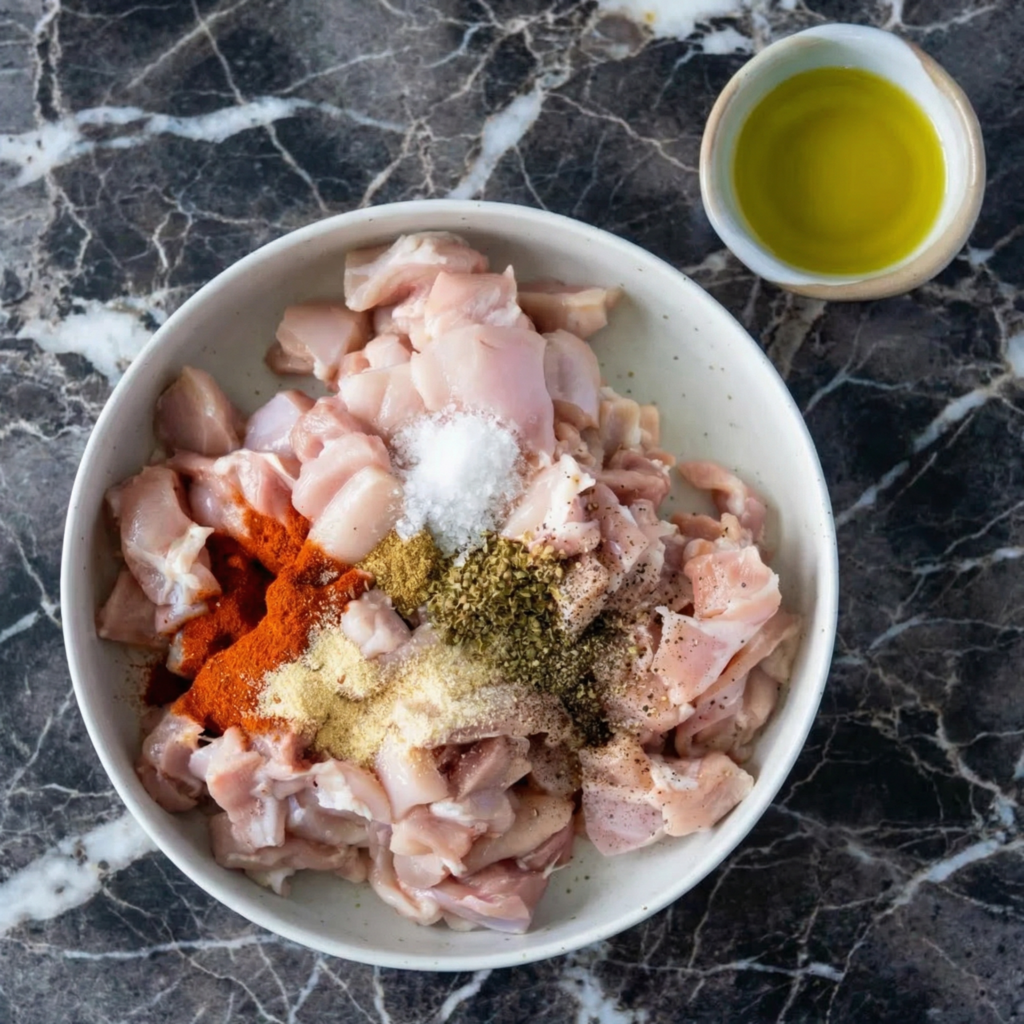
    If you don’t already have cooked chicken, start by seasoning chicken breast or thighs with chili powder, cumin, paprika, garlic powder, salt, and pepper.

    Cook the chicken in a skillet with a little olive oil over medium heat for about 6–8 minutes per side, or until fully cooked.

    Once done, allow it to cool slightly, then shred or dice the meat into bite-sized pieces.

    Using leftover roasted or rotisserie chicken also works perfectly and saves time.

    Step 2: Cook the Vegetables

    Heat 1 tablespoon of olive oil in a skillet over medium heat.

    Add the chopped onion and sliced bell pepper, cooking for about 3–4 minutes until softened and slightly caramelized.

    This step enhances the flavor and adds a little sweetness that complements the savory chicken and cheese.

    Once cooked, remove the vegetables from the pan and set aside.


    Step 3: Combine the Filling

    In a mixing bowl, combine the shredded chicken with the cooked onions and peppers.

    Taste the mixture and adjust seasoning with a pinch of salt or extra spices if desired.

    Mixing the filling beforehand ensures each quesadilla has evenly distributed flavor.


    Step 4: Prepare the Tortillas

    Lay the tortillas flat on a clean surface.

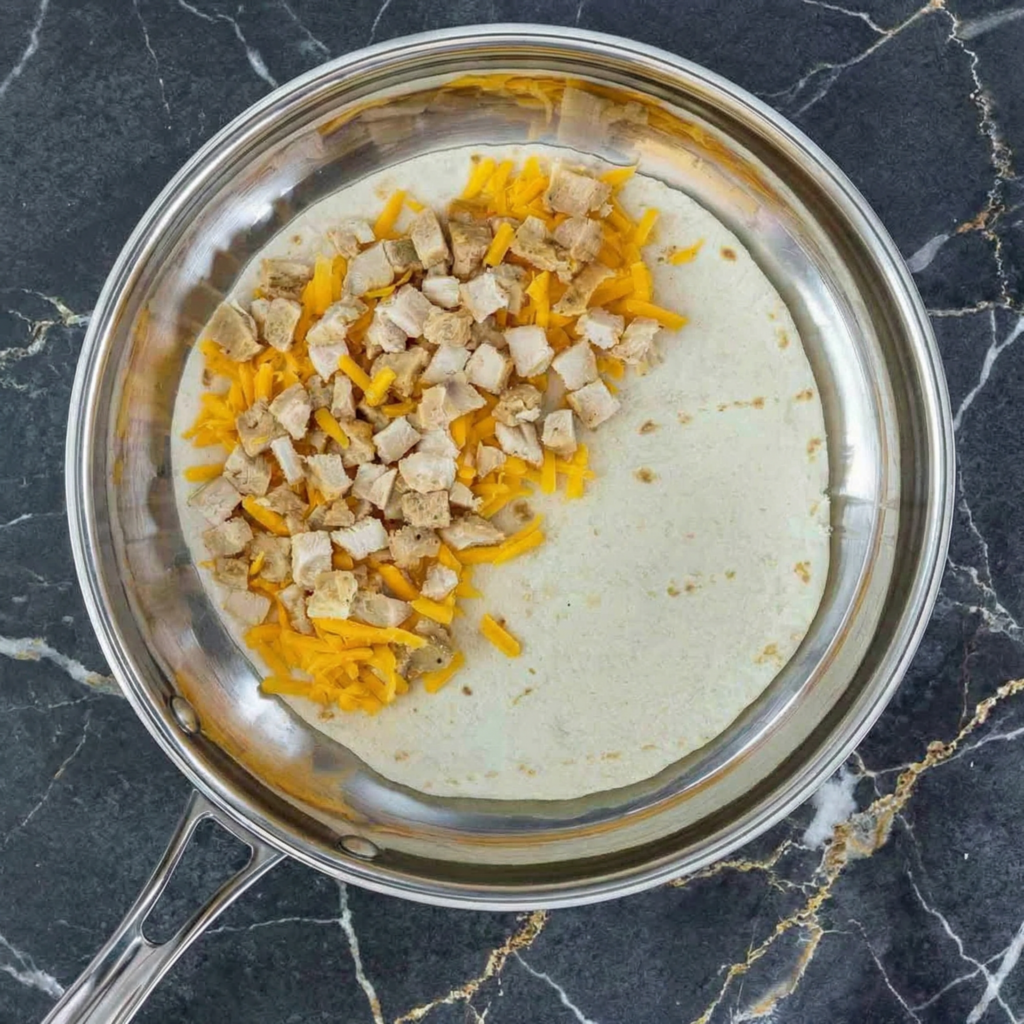
    Sprinkle a layer of shredded cheese over half of each tortilla. The cheese acts as a “glue” that holds the filling together once melted.

    Next, add a generous scoop of the chicken mixture over the cheese.

    Top with another layer of shredded cheese before folding the tortilla in half.

    The double layer of cheese helps ensure every bite is deliciously gooey.


    Step 5: Heat the Skillet

    Place a large skillet or griddle over medium heat.

    Add a small amount of butter or oil and allow it to melt completely.

    The fat helps the tortilla crisp up while adding rich flavor.

    Step 6: Cook the Quesadillas

    Place one or two folded quesadillas into the skillet, depending on its size.

    Cook for about 3–4 minutes on the first side until the tortilla becomes golden brown and crispy.

    Carefully flip the quesadilla and cook the other side for another 2–3 minutes until the cheese melts and the tortilla is evenly toasted.

    Press gently with a spatula while cooking to help the filling heat evenly.


    Step 7: Rest and Slice

    Transfer the cooked quesadilla to a cutting board and let it rest for about one minute.

    This short resting period allows the melted cheese to settle slightly so the filling doesn’t spill out when sliced.

    Use a pizza cutter or sharp knife to slice each quesadilla into wedges.


    Step 8: Prepare the Remaining Quesadillas

    Repeat the cooking process with the remaining tortillas and filling.

    Add more butter or oil to the skillet if needed to maintain a crispy texture.

    Work in batches to avoid overcrowding the pan.


    Step 9: Serve with Toppings

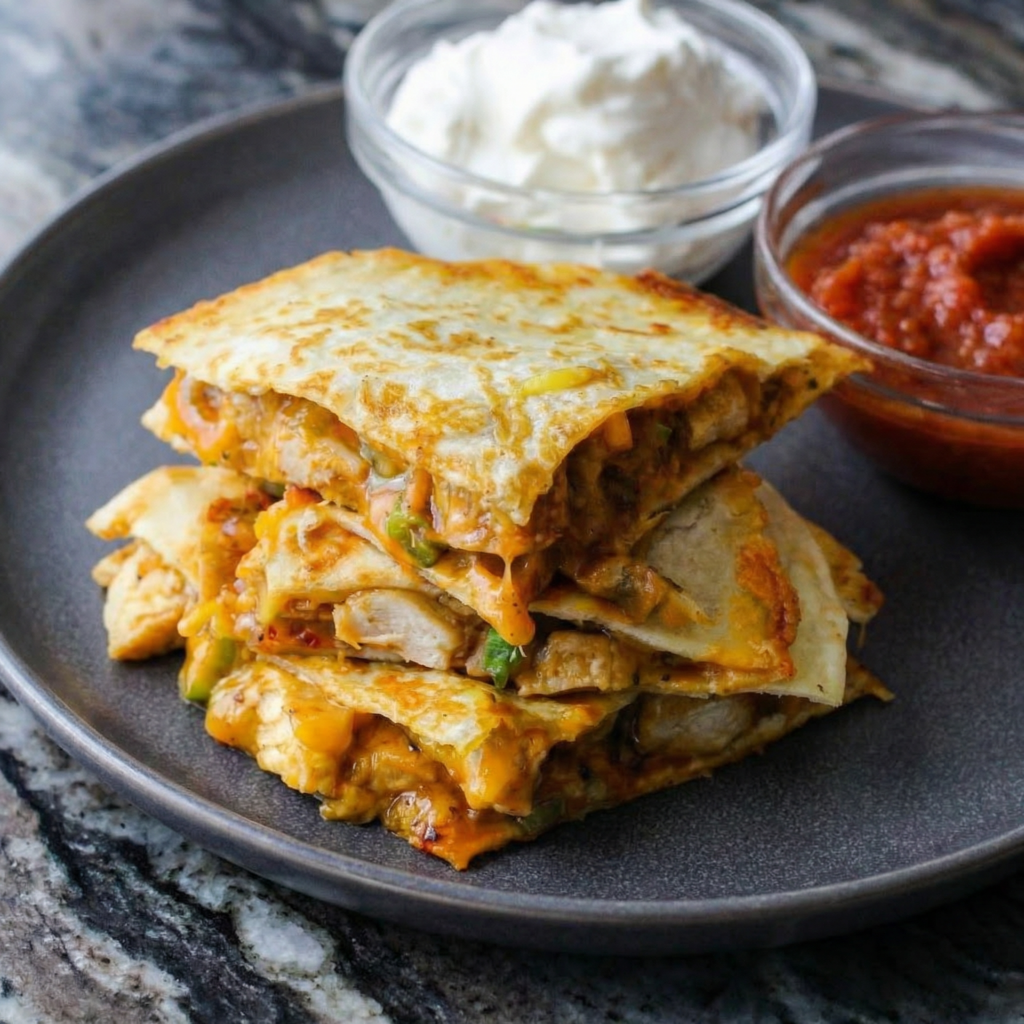
    Arrange the sliced quesadillas on a serving plate.

    Serve them with your favorite toppings such as sour cream, salsa, guacamole, or fresh cilantro.

    The creamy and tangy toppings complement the cheesy filling perfectly.


    Tips for the Best Chicken Quesadillas

    For the most delicious results, keep these tips in mind:

    Use good melting cheese. Monterey Jack, cheddar, Oaxaca, or a Mexican cheese blend melt beautifully.

    Don’t overfill. Too much filling can cause the quesadilla to fall apart while cooking.

    Cook over medium heat. This allows the cheese to melt fully without burning the tortilla.

    Crisp both sides. A golden, crunchy exterior makes all the difference.


    Flavor Variations

    Once you master the basic recipe, you can experiment with different flavors.

    Try adding:

    • Corn or black beans for extra texture
    • Jalapeños for heat
    • Mushrooms for a savory twist
    • Chipotle sauce for smoky flavor
    • Avocado slices for creaminess

    Chicken quesadillas are incredibly flexible, making them perfect for using up leftovers or trying new combinations.


    Final Thoughts

    Chicken quesadillas are the ultimate combination of simplicity and flavor. With crispy tortillas, seasoned chicken, sautéed vegetables, and melted cheese, every bite delivers satisfying textures and bold taste.

    Best of all, they come together quickly with everyday ingredients, making them perfect for busy weeknights or relaxed weekend meals. Once you master this recipe, you’ll have a go-to dish that everyone will love.

    Serve them hot, add your favorite toppings, and enjoy a plate of homemade chicken quesadillas that taste every bit as good as restaurant versions—maybe even better.
  • Crispy, Golden, and Loaded: The Ultimate Chicken Chimichangas You Can Make at Home

    Crispy, Golden, and Loaded: The Ultimate Chicken Chimichangas You Can Make at Home

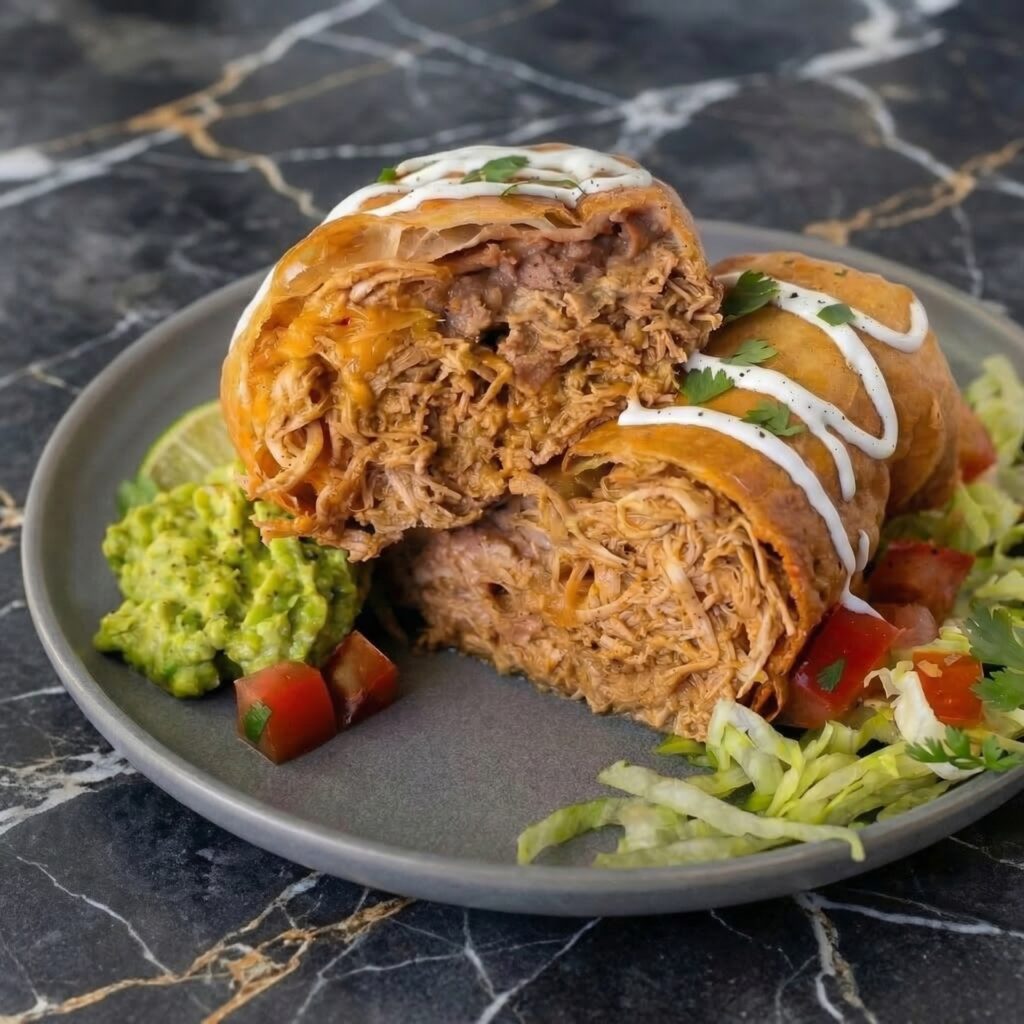
    If you love burritos but crave something crispy, indulgent, and packed with bold flavor, Chicken Chimichangas are about to become your new obsession.

    These deep-fried (or baked!) burritos are stuffed with seasoned shredded chicken, melty cheese, and savory fillings, then cooked until perfectly golden and crunchy on the outside.

    Every bite delivers a satisfying crunch followed by warm, flavorful filling that’s pure comfort food.

    The best part?

    They’re surprisingly easy to make at home. Follow this step-by-step guide and you’ll have restaurant-style chimichangas fresh from your own kitchen.


    Ingredients You’ll Need

    For the Chicken Filling:

    • 2 cups cooked shredded chicken (rotisserie works great)
    • 1 tablespoon olive oil
    • ½ small onion, finely diced
    • 2 cloves garlic, minced
    • 1 teaspoon chili powder
    • 1 teaspoon ground cumin
    • ½ teaspoon smoked paprika
    • ½ teaspoon salt
    • ¼ teaspoon black pepper
    • ½ cup salsa
    • 1 cup shredded Mexican blend or cheddar cheese

    For Assembling:

    • 4 large flour tortillas
    • Vegetable oil (for frying)

    Optional Toppings:

    • Sour cream
    • Guacamole
    • Shredded lettuce
    • Diced tomatoes
    • Chopped cilantro
    • Salsa

    Step 1: Prepare the Chicken Filling

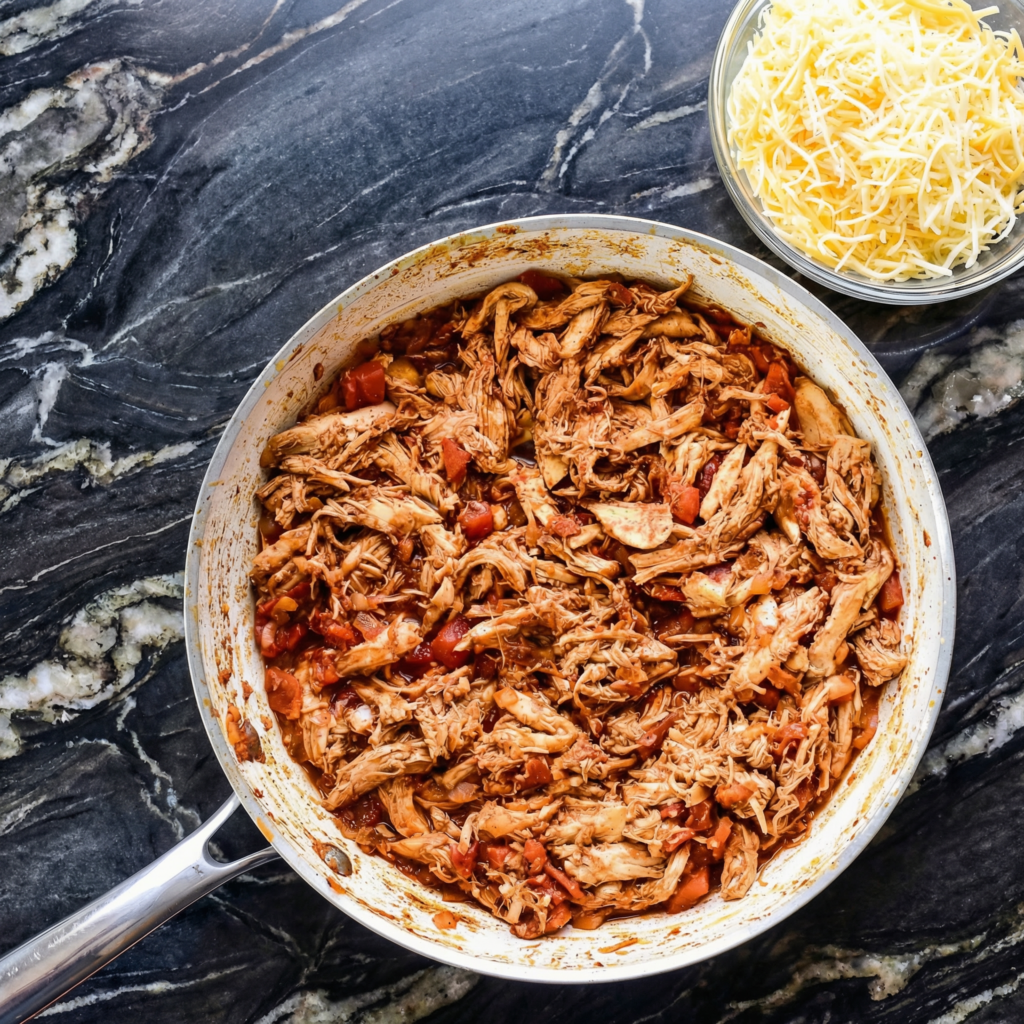
    Heat olive oil in a skillet over medium heat. Add the diced onion and cook for 3–4 minutes until softened. Stir in the minced garlic and cook for another 30 seconds until fragrant.

    Add the shredded chicken to the skillet. Sprinkle in the chili powder, cumin, smoked paprika, salt, and black pepper. Stir well to coat the chicken evenly with the spices.

    Pour in the salsa and cook for 2–3 minutes, allowing everything to heat through and the flavors to blend. Remove from heat and stir in the shredded cheese while the mixture is still warm. The cheese should begin to melt slightly, creating a creamy filling.


    Step 2: Warm the Tortillas

    Warm the flour tortillas in the microwave for about 20–30 seconds. This makes them more pliable and less likely to tear when folding.

    Lay them flat on a clean surface, ready for assembly.


    Step 3: Assemble the Chimichangas

    Spoon about ½ to ¾ cup of the chicken mixture into the center of each tortilla. Be careful not to overfill, as this can make rolling difficult.

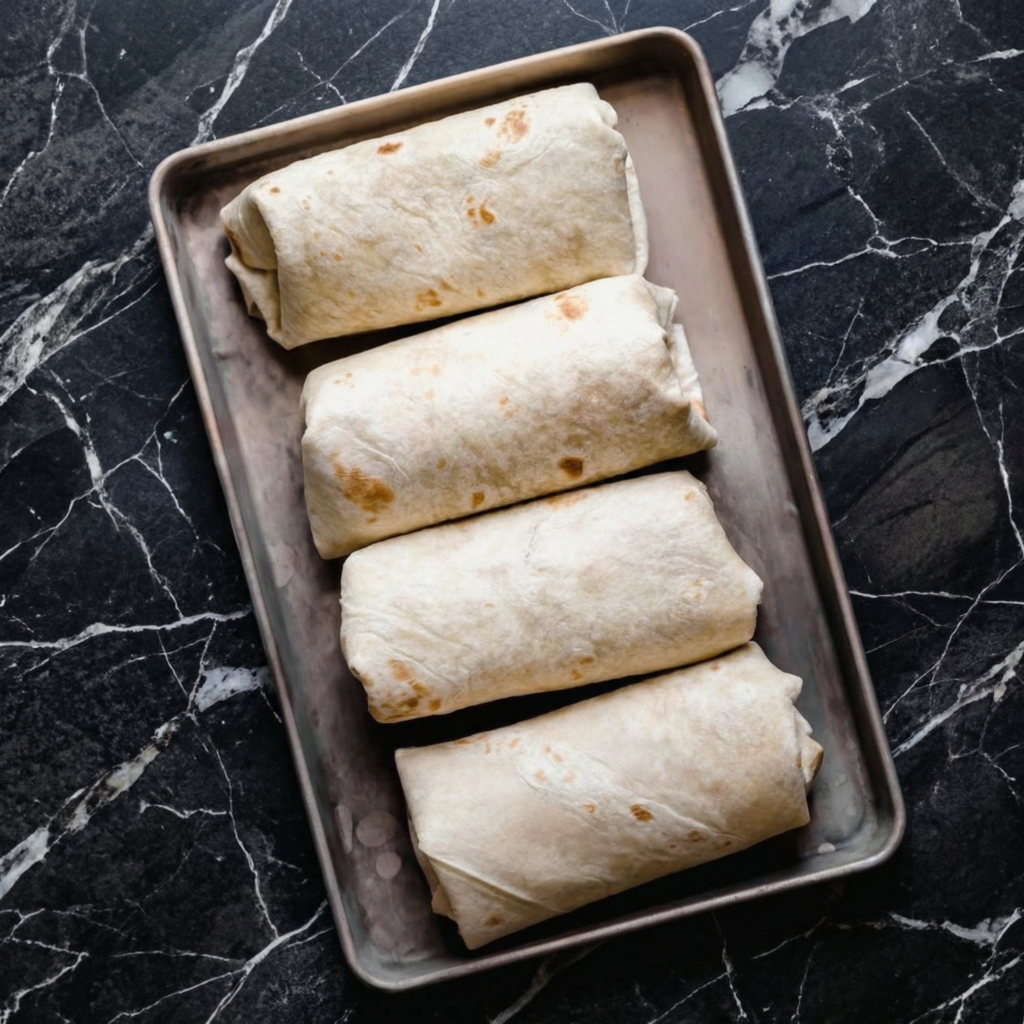
    Fold the sides inward first, then roll the tortilla tightly from the bottom up, burrito-style. The filling should be fully enclosed.

    Place each rolled chimichanga seam-side down on a plate while you finish assembling the rest.


    Step 4: Heat the Oil

    Pour about 1–2 inches of vegetable oil into a deep skillet or heavy-bottomed pot.

    Heat over medium heat until the oil reaches about 350°F (175°C). If you don’t have a thermometer, drop in a small piece of tortilla—if it sizzles immediately, the oil is ready.


    Step 5: Fry Until Golden

    Carefully place one or two chimichangas seam-side down into the hot oil. Do not overcrowd the pan.

    Fry for 2–3 minutes per side, turning carefully with tongs, until golden brown and crispy all over.

    Remove and place on a plate lined with paper towels to drain excess oil. Repeat with remaining chimichangas.


    Step 6: Alternative Baking Method

    If you prefer a lighter option, brush each chimichanga lightly with oil and place seam-side down on a baking sheet.

    Bake at 400°F (200°C) for 20–25 minutes, flipping halfway through, until crispy and golden.

    While not as deeply crispy as fried, the baked version is still delicious and satisfying.


    Step 7: Add Toppings and Serve

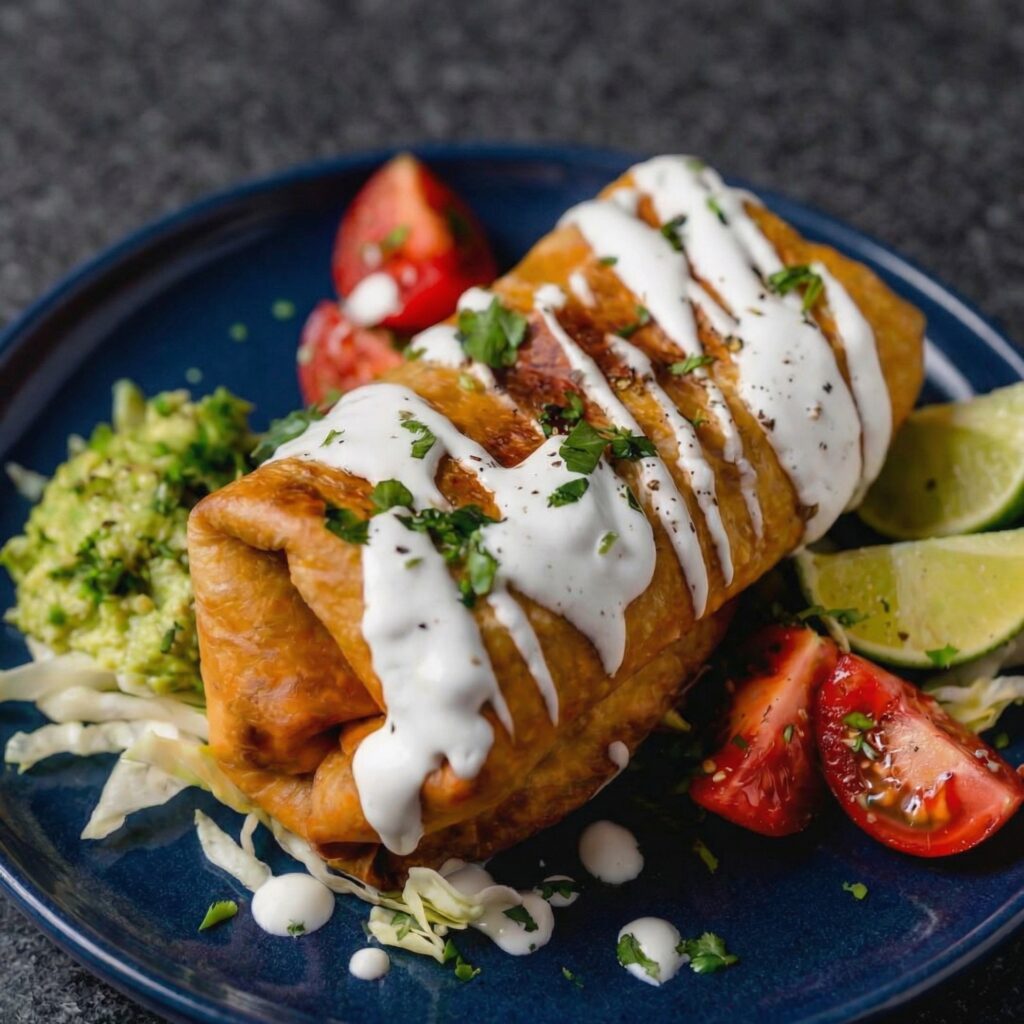
    Place the hot chimichangas on serving plates. Top with sour cream, guacamole, shredded lettuce, diced tomatoes, or extra salsa.

    For an extra indulgent touch, drizzle with warm queso or enchilada sauce before serving.

    Serve immediately while crispy and hot.


    Pro Tips for Perfect Chimichangas

    • Don’t overfill the tortillas to prevent bursting during frying.
    • Secure tightly when rolling to keep everything sealed.
    • Maintain oil temperature for even browning and crispiness.
    • Drain properly on paper towels to avoid sogginess.
    • Use rotisserie chicken for quick prep and extra flavor.

    Flavor Variations

    Once you master the classic chicken version, try these creative ideas:

    • Spicy Jalapeño Chicken: Add diced jalapeños to the filling.
    • Creamy Version: Stir in a few tablespoons of cream cheese for extra richness.
    • Bean & Rice Add-In: Add seasoned rice or refried beans for a heartier filling.
    • Buffalo Chicken Twist: Mix shredded chicken with buffalo sauce and mozzarella.

    Make-Ahead and Storage

    Chimichangas can be assembled ahead of time and stored in the refrigerator for up to 24 hours before cooking.

    Cooked chimichangas can be stored in an airtight container for up to 3 days. Reheat in the oven at 375°F until warmed through and crispy again.

    They also freeze well—wrap tightly in foil and freeze for up to 2 months.


    Why This Recipe Works

    Chicken chimichangas combine contrasting textures and bold flavors.

    The seasoned chicken filling is savory and slightly saucy, while the melted cheese binds everything together. Frying creates that irresistible crispy shell that makes chimichangas stand apart from regular burritos.

    They’re customizable, crowd-pleasing, and perfect for weeknight dinners or festive gatherings.


    Final Thoughts

    Chicken Chimichangas are comfort food at its finest—crispy on the outside, cheesy and flavorful on the inside.

    With just a handful of ingredients and simple techniques, you can recreate this restaurant favorite in your own kitchen.

    Whether you fry them for maximum crunch or bake them for a lighter option, these chimichangas deliver big flavor and satisfying texture every time.

    Serve them with your favorite toppings, gather around the table, and enjoy every golden, crunchy bite.

  • Creamy & Comforting: The Ultimate Mushroom Risotto With Peas (Step-by-Step Guide)

    Creamy & Comforting: The Ultimate Mushroom Risotto With Peas (Step-by-Step Guide)

    There’s something deeply comforting about a bowl of Mushroom Risotto with Peas. It’s creamy without heavy cream, rich without being overwhelming, and filled with earthy mushrooms and sweet bursts of green peas.

    This classic Italian-inspired dish transforms simple pantry staples into a luxurious meal that feels restaurant-worthy but is absolutely achievable at home.

    Risotto has a reputation for being fussy, but once you understand the technique, it becomes a relaxing and rewarding cooking experience. With patience, warm broth, and steady stirring, you’ll create a silky, flavorful dish that’s perfect for both weeknight dinners and elegant gatherings.

    Let’s walk through it step by step.


    Why You’ll Love This Mushroom Risotto

    • Creamy texture without cream
    • Deep, savory mushroom flavor
    • Bright sweetness from peas
    • Naturally gluten-free
    • Elegant yet comforting

    This dish is all about balance—earthy, sweet, rich, and fresh in every bite.


    Ingredients You’ll Need

    For the Risotto Base:

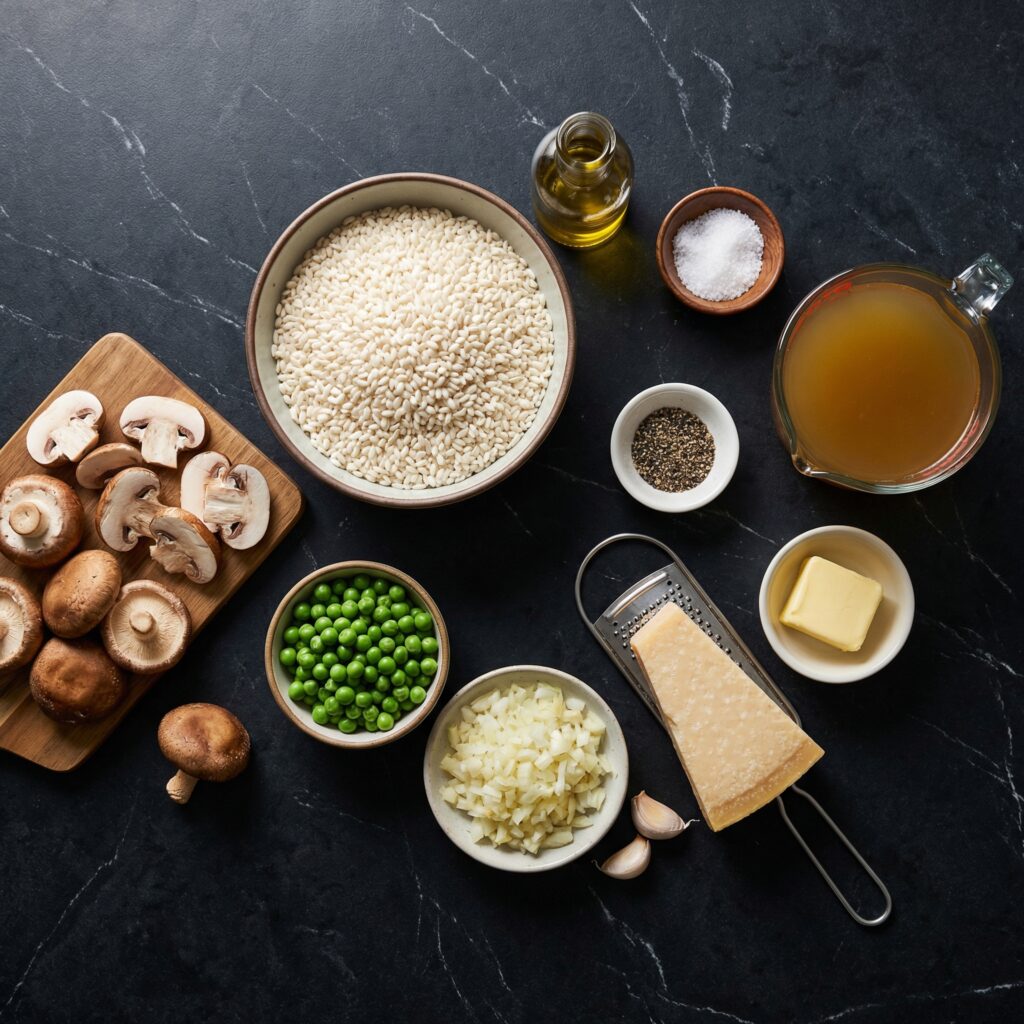
    • 1 ½ cups Arborio rice
    • 4–5 cups vegetable or chicken broth (kept warm)
    • 2 tablespoons olive oil
    • 2 tablespoons unsalted butter

    For the Vegetables:

    • 8 ounces mushrooms (cremini, button, or a mix), sliced
    • 1 small onion or 2 shallots, finely diced
    • 2 cloves garlic, minced
    • 1 cup frozen peas

    For Finishing:

    • ½ cup dry white wine
    • ½ cup freshly grated Parmesan cheese
    • Salt and freshly cracked black pepper

    Optional Garnish:

    • Fresh parsley
    • Extra Parmesan
    • Lemon zest

    Step 1: Warm the Broth

    Pour your broth into a saucepan and keep it gently simmering over low heat.

    Adding warm broth to risotto is essential—it allows the rice to cook evenly and release starch properly. Cold broth slows the cooking process and affects texture.


    Step 2: Sauté the Mushrooms

    Heat 1 tablespoon olive oil and 1 tablespoon butter in a large, heavy-bottomed skillet or saucepan over medium heat.

    Add the sliced mushrooms in a single layer. Cook for 5–7 minutes, stirring occasionally, until they release their moisture and turn golden brown.

    Season lightly with salt and pepper.

    Remove the mushrooms from the pan and set aside. Cooking them separately ensures they stay tender and flavorful rather than watery.


    Step 3: Cook the Aromatics

    In the same pan, add the remaining olive oil.

    Add diced onion or shallots and cook for 3–4 minutes until soft and translucent.

    Stir in the minced garlic and cook for 30 seconds, just until fragrant.

    These aromatics create a flavorful base that supports the creamy rice.


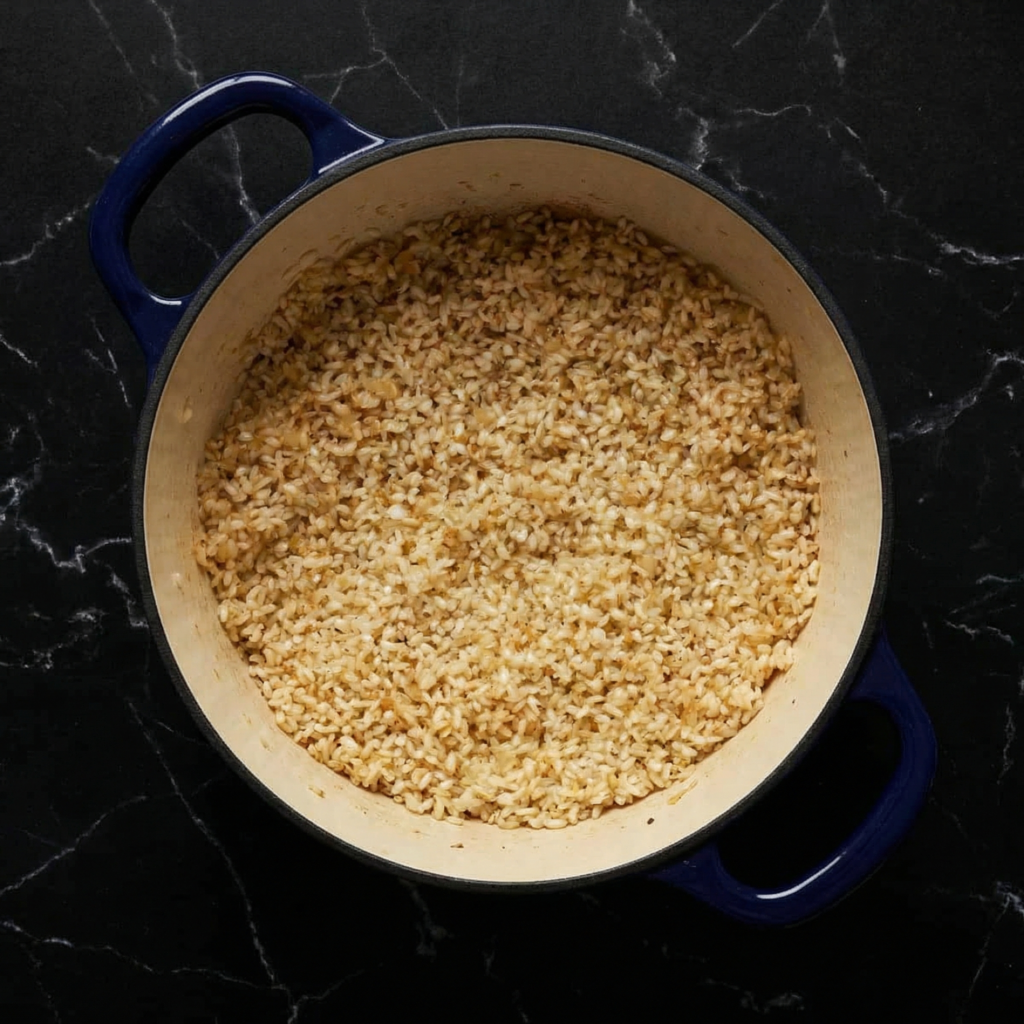
    Step 4: Toast the Rice

    Add the Arborio rice directly into the pan.

    Stir continuously for 1–2 minutes, coating each grain in oil. The edges will become slightly translucent while the center remains opaque.

    Toasting enhances the rice’s nutty flavor and helps maintain structure during cooking.


    Step 5: Deglaze with Wine

    Pour in the white wine and stir constantly.

    Allow it to simmer until most of the liquid evaporates. This adds acidity and depth, balancing the richness of the final dish.

    If you prefer not to use wine, substitute with a splash of broth and a squeeze of lemon.


    Step 6: Add Broth Gradually

    Add one ladle (about ½ cup) of warm broth to the rice.

    Stir gently and frequently until the liquid is mostly absorbed.

    Repeat this process—adding broth one ladle at a time—waiting for each addition to absorb before adding the next.

    This gradual addition is the key to creamy risotto. It encourages the rice to release starch slowly, creating that signature silky texture.


    Step 7: Stir with Patience

    Continue adding broth and stirring for 18–22 minutes.

    Taste as you go. The rice should be tender but still slightly firm in the center—al dente.

    Adjust the heat as needed to maintain a gentle simmer.

    Risotto isn’t about constant frantic stirring but steady, attentive movement.


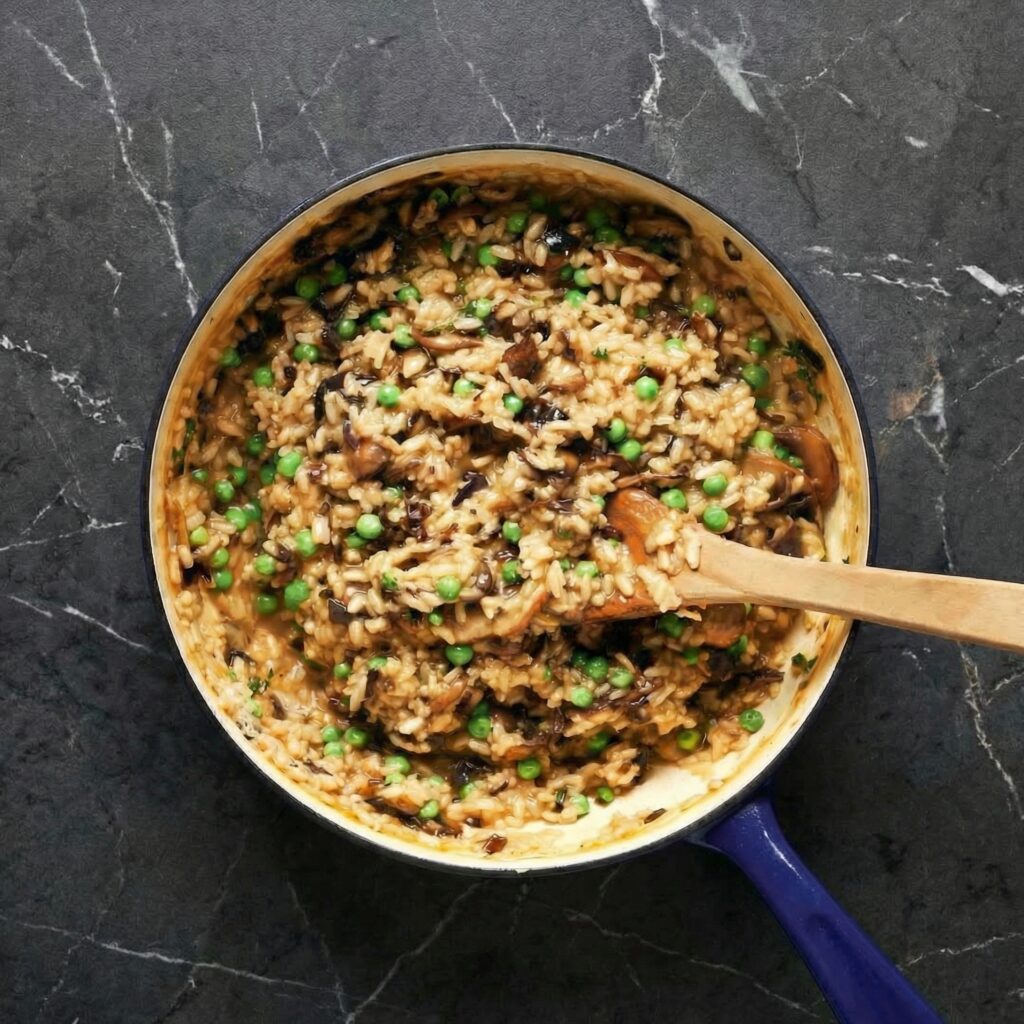
    Step 8: Add Mushrooms and Peas

    When the rice is nearly done, stir the sautéed mushrooms back into the pan.

    Add the peas and cook for 2–3 minutes until heated through and bright green.

    The peas add a pop of sweetness and color, complementing the earthy mushrooms.


    Step 9: Finish with Butter and Parmesan

    Remove the pan from the heat.

    Stir in the remaining tablespoon of butter and the grated Parmesan cheese.

    This step, called mantecatura, gives risotto its luxurious, glossy finish.

    Taste and adjust seasoning with salt and freshly cracked black pepper.


    Step 10: Rest and Serve

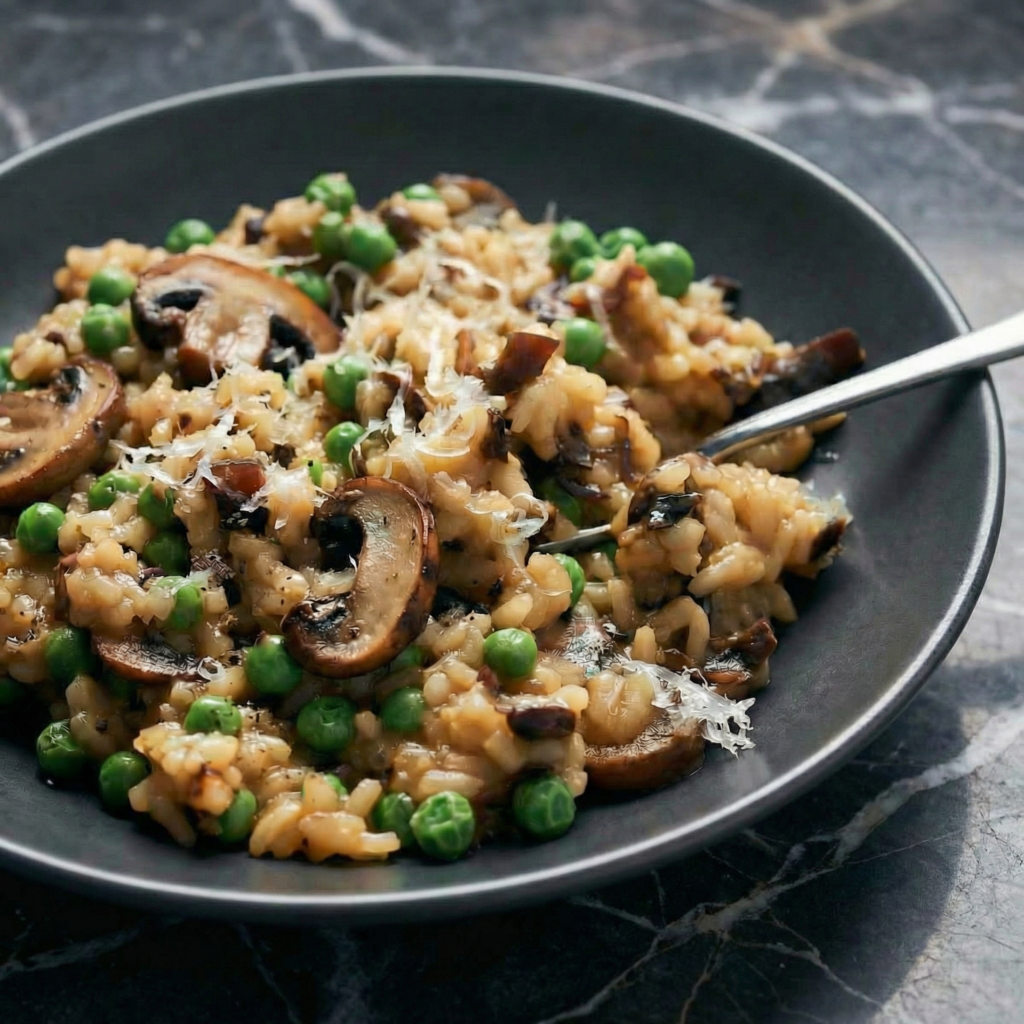
    Let the risotto rest for 1–2 minutes before serving.

    It should flow slightly when spooned onto a plate—not stiff or dry.

    Garnish with fresh parsley, extra Parmesan, and a touch of lemon zest if desired.

    Serve immediately while warm and creamy.


    Texture and Flavor Highlights

    • Silky, creamy consistency
    • Tender rice with slight bite
    • Rich umami from mushrooms
    • Sweet bursts of peas
    • Savory, cheesy finish

    The combination creates a beautifully balanced dish that feels indulgent yet fresh.


    Pro Tips for Perfect Risotto

    Use Arborio rice. Its high starch content is essential.

    Keep broth warm. It ensures even cooking.

    Don’t rush the process. Gradual broth addition is key.

    Taste frequently. Texture matters as much as flavor.

    Serve immediately. Risotto thickens as it cools.


    Optional Variations

    • Vegan Version: Use olive oil instead of butter and plant-based Parmesan.
    • Protein Boost: Top with grilled chicken or shrimp.
    • Herb Forward: Add thyme or rosemary.
    • Extra Creamy: Stir in a spoonful of mascarpone at the end.
    • Lemon Brightness: Add extra lemon zest for freshness.

    Storage and Reheating

    Risotto is best enjoyed fresh, but leftovers can be stored in the refrigerator for up to 2 days.

    Reheat gently on the stovetop with a splash of broth or water to restore creaminess.

    Avoid high heat to prevent drying out the rice.


    Why This Recipe Works

    Mushroom Risotto with Peas works because it relies on technique rather than complicated ingredients. Slow stirring and gradual broth addition allow the rice’s natural starch to create creaminess.

    Sautéed mushrooms add depth and umami, while peas bring brightness and contrast.

    The finishing touch of butter and Parmesan ties everything together into a glossy, cohesive dish that feels comforting yet elegant.


    Creamy, savory, and beautifully balanced, Mushroom Risotto with Peas is a dish that rewards patience and simple technique.

    Once you master it, you’ll have a timeless recipe that delivers comfort, elegance, and incredible flavor every single time.

  • Bright, Buttery & Bold: The Ultimate Homemade Chicken Piccata

    Bright, Buttery & Bold: The Ultimate Homemade Chicken Piccata

    If you’re craving something comforting yet elegant, Chicken Piccata is the answer.

    This Italian-American classic delivers golden pan-seared chicken cutlets bathed in a silky lemon-butter sauce dotted with briny capers. It’s simple enough for a weeknight dinner, yet impressive enough for guests.

    The magic lies in balancing bright citrus with rich butter and savory chicken—creating a dish that tastes far more complex than the effort required.

    Let’s walk step by step through how to make perfect Chicken Piccata at home.


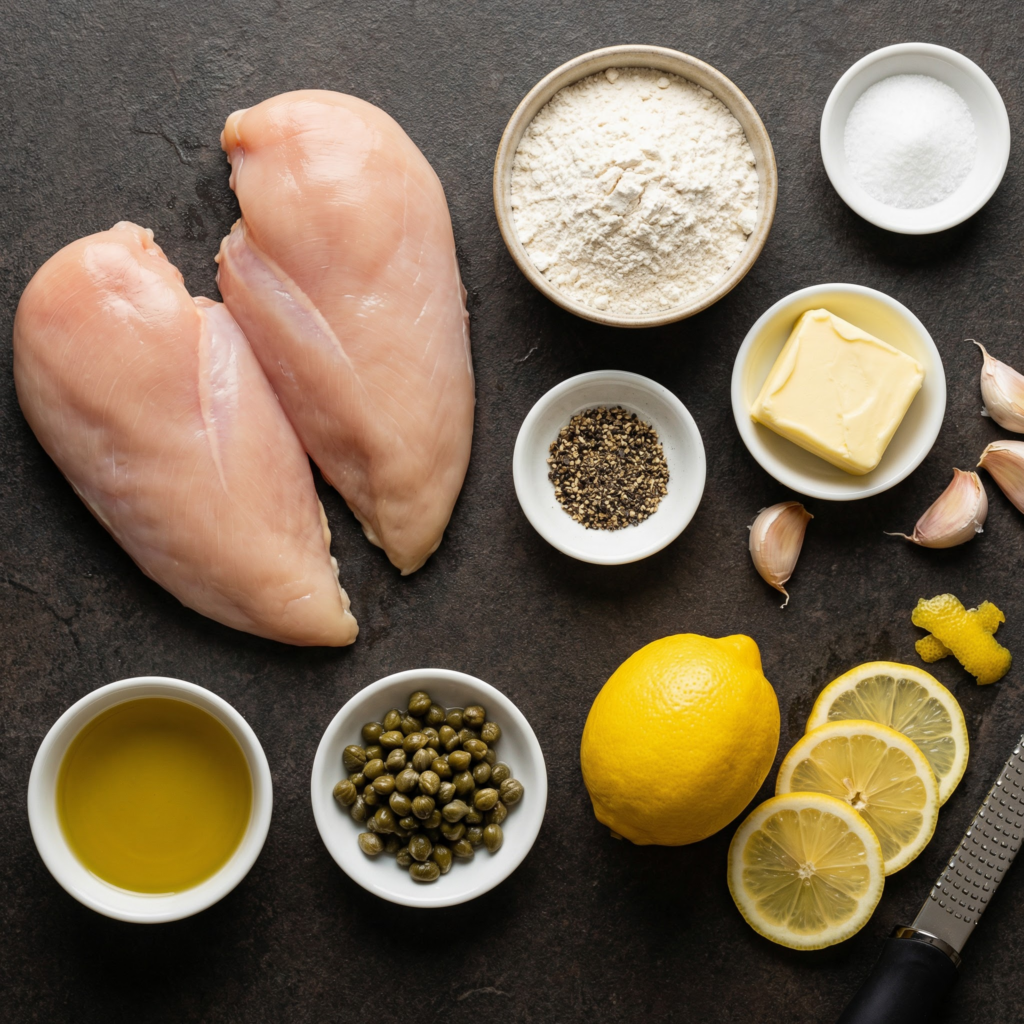
    Ingredients

    For the chicken:

    • 2 large boneless, skinless chicken breasts
    • Salt and freshly ground black pepper
    • ½ cup all-purpose flour
    • 3 tablespoons olive oil
    • 2 tablespoons unsalted butter

    For the sauce:

    • ¾ cup chicken broth
    • ⅓ cup freshly squeezed lemon juice (about 2 lemons)
    • 2 tablespoons capers, drained
    • 3 tablespoons unsalted butter, cut into pieces
    • 2 tablespoons fresh parsley, finely chopped
    • Lemon slices, for garnish (optional)

    Step 1: Prepare the Chicken Cutlets

    Place the chicken breasts on a cutting board. Carefully slice each one in half horizontally to create four thinner cutlets. If needed, gently pound them between sheets of plastic wrap to an even thickness—about ½ inch thick. Even thickness ensures they cook quickly and evenly.

    Pat the chicken dry with paper towels. Season both sides generously with salt and freshly ground black pepper.


    Step 2: Dredge in Flour

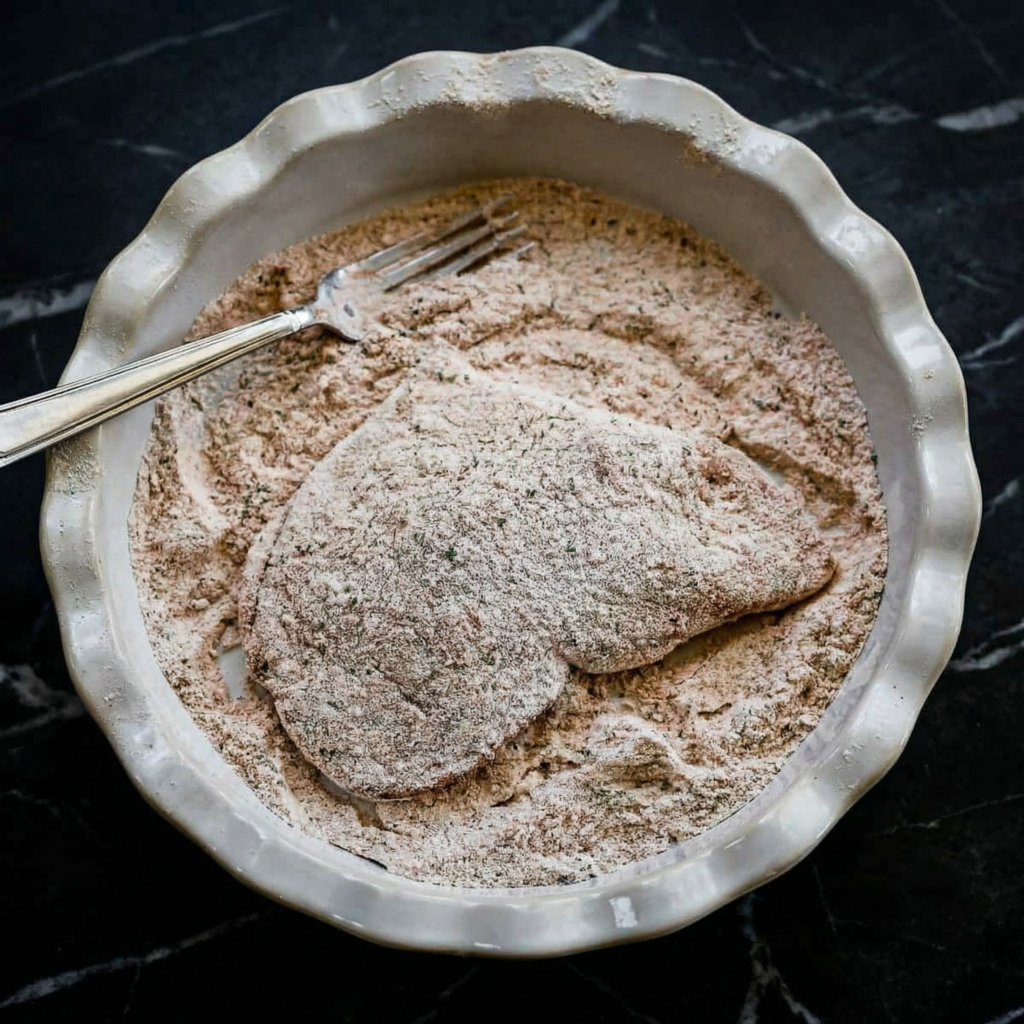
    Spread the flour on a shallow plate. Lightly dredge each chicken cutlet in flour, shaking off any excess. The flour creates a delicate crust and helps thicken the sauce later.

    Set the coated cutlets aside on a plate while you heat the pan.


    Step 3: Sear the Chicken

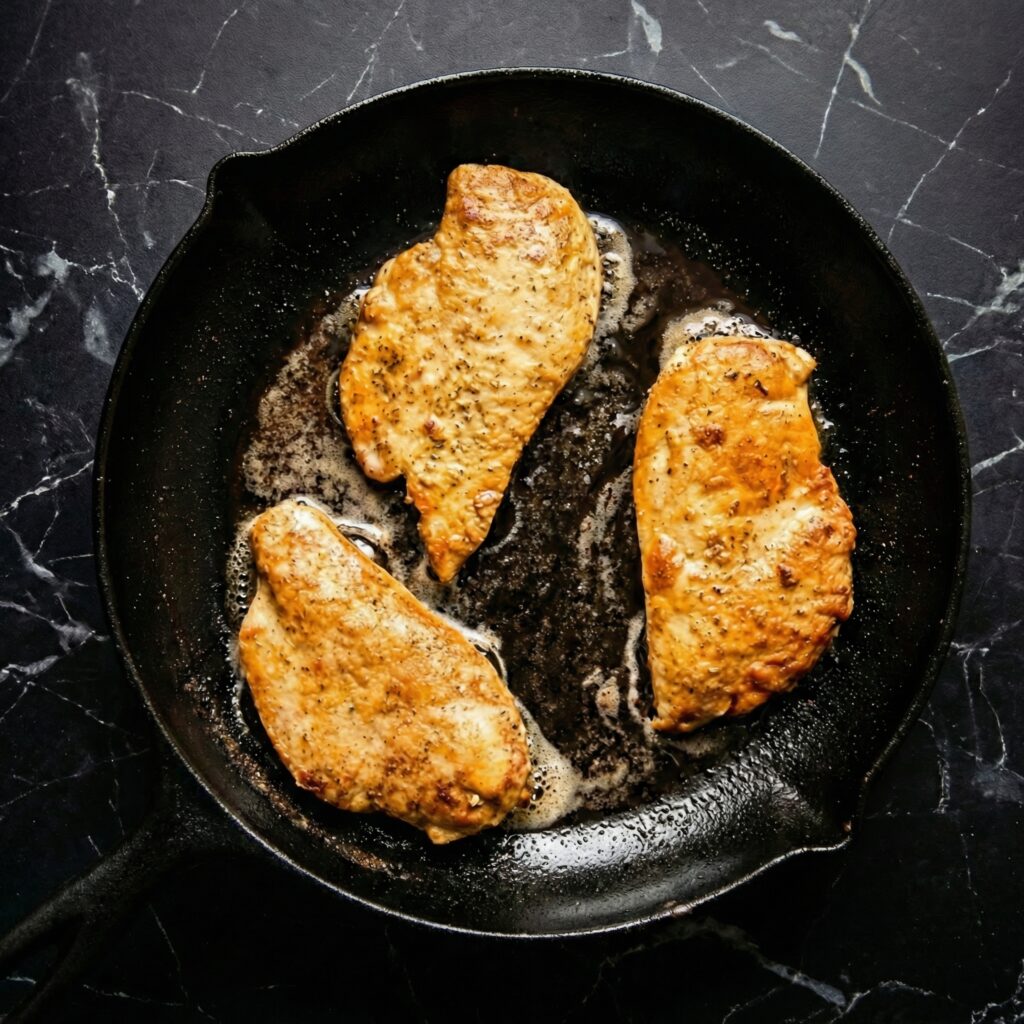
    Heat a large skillet over medium-high heat. Add the olive oil and 2 tablespoons of butter. Once the butter is melted and foamy, carefully place the chicken cutlets in the pan in a single layer. Avoid overcrowding; cook in batches if necessary.

    Cook for about 3–4 minutes on the first side without moving them. You’re looking for a golden-brown crust. Flip and cook for another 2–3 minutes until fully cooked through and no longer pink in the center.

    Transfer the cooked chicken to a plate and tent loosely with foil to keep warm.


    Step 4: Build the Lemon-Caper Sauce

    With the pan still over medium heat, pour in the chicken broth to deglaze. Use a wooden spoon to scrape up the browned bits from the bottom of the pan—this is pure flavor.

    Let the broth simmer for 2–3 minutes, allowing it to reduce slightly. Stir in the freshly squeezed lemon juice and capers. Continue simmering for another 2–3 minutes until the sauce reduces and thickens slightly.


    Step 5: Finish with Butter

    Reduce the heat to low. Add the remaining 3 tablespoons of butter, one piece at a time, stirring continuously until melted and incorporated. This technique—called “mounting with butter”—creates a silky, glossy sauce.

    Taste and adjust seasoning if needed. If the sauce is too tart, a small pinch of salt can help balance it. If you prefer more brightness, add an extra squeeze of lemon.


    Step 6: Return the Chicken to the Pan

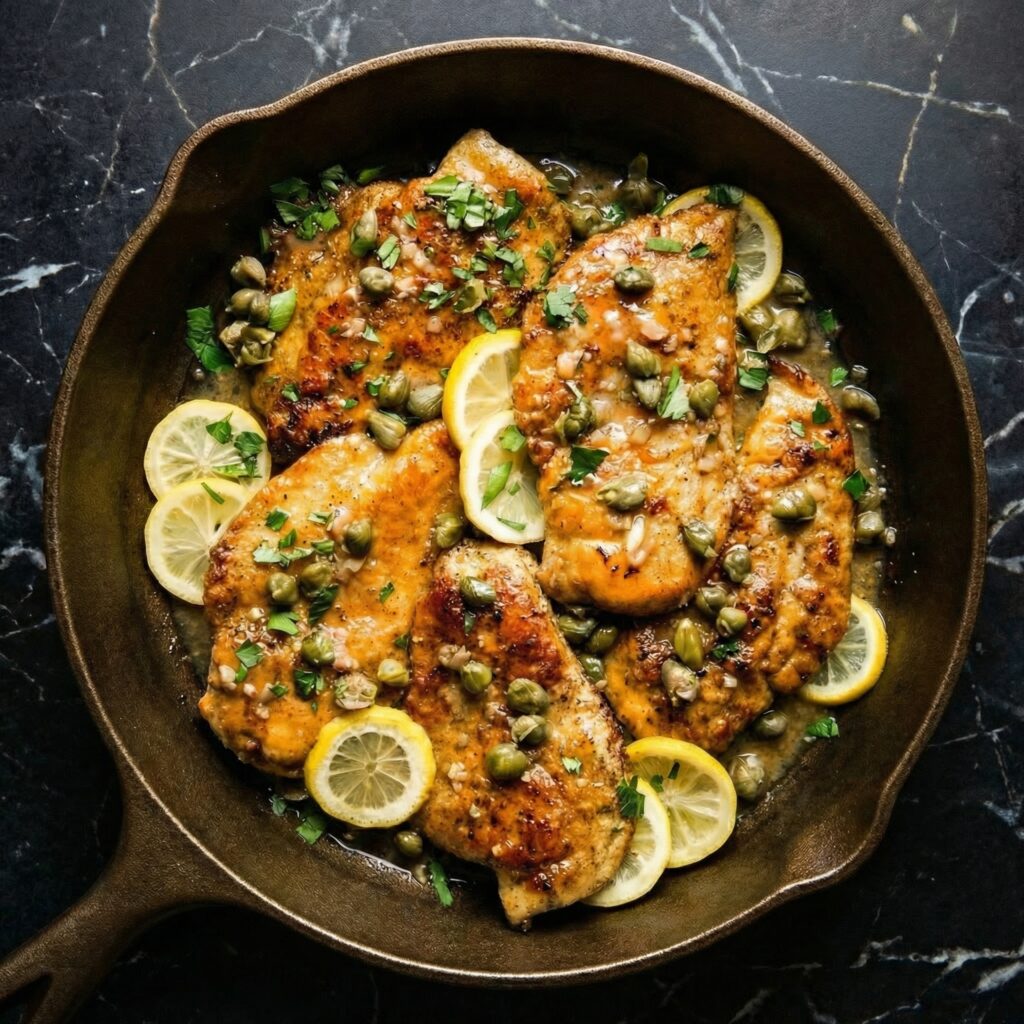
    Place the chicken cutlets back into the skillet, spooning the sauce over the top. Let everything simmer together for 2–3 minutes so the chicken absorbs the flavors.

    The sauce should lightly coat the chicken without being too thick or too watery.


    Step 7: Garnish and Serve

    Sprinkle freshly chopped parsley over the chicken. Garnish with thin lemon slices if desired. Serve immediately while the sauce is glossy and warm.


    Serving Suggestions

    Chicken Piccata pairs beautifully with angel hair pasta, mashed potatoes, or fluffy rice to soak up the luscious sauce. For a lighter option, serve it alongside sautéed spinach or roasted asparagus. A simple green salad with a light vinaigrette complements the rich, buttery flavors.

    If entertaining, consider serving with crusty bread for dipping into the lemony sauce.


    Pro Tips for Success

    • Use fresh lemon juice for the brightest flavor. Bottled juice won’t give the same fresh zing.
    • Keep the heat steady when making the sauce. Too high, and it may reduce too quickly; too low, and it won’t thicken properly.
    • Don’t skip scraping up the browned bits after searing. They add incredible depth.
    • Thin, evenly pounded chicken cooks faster and stays tender.

    Why This Recipe Works

    Chicken Piccata is a masterclass in balance. The flour creates a light crust and helps thicken the sauce naturally. The lemon juice cuts through the richness of the butter, while capers bring salty bursts of flavor that keep every bite interesting.

    The key is restraint—just enough lemon to brighten, just enough butter to enrich. When done correctly, the sauce clings gently to the chicken without overpowering it.


    Make It Your Own

    You can add a splash of dry white wine before the broth for extra depth. Some cooks like to incorporate a bit of cream for a richer sauce, though traditional versions keep it light and lemon-forward. You can even substitute thin veal cutlets for a classic variation.


    Chicken Piccata proves that a handful of simple ingredients can create something extraordinary. With crisp golden chicken and a vibrant lemon-caper sauce, this dish brings restaurant-quality flavor straight to your kitchen. Once you make it from scratch, it’s bound to become a regular in your dinner rotation.