
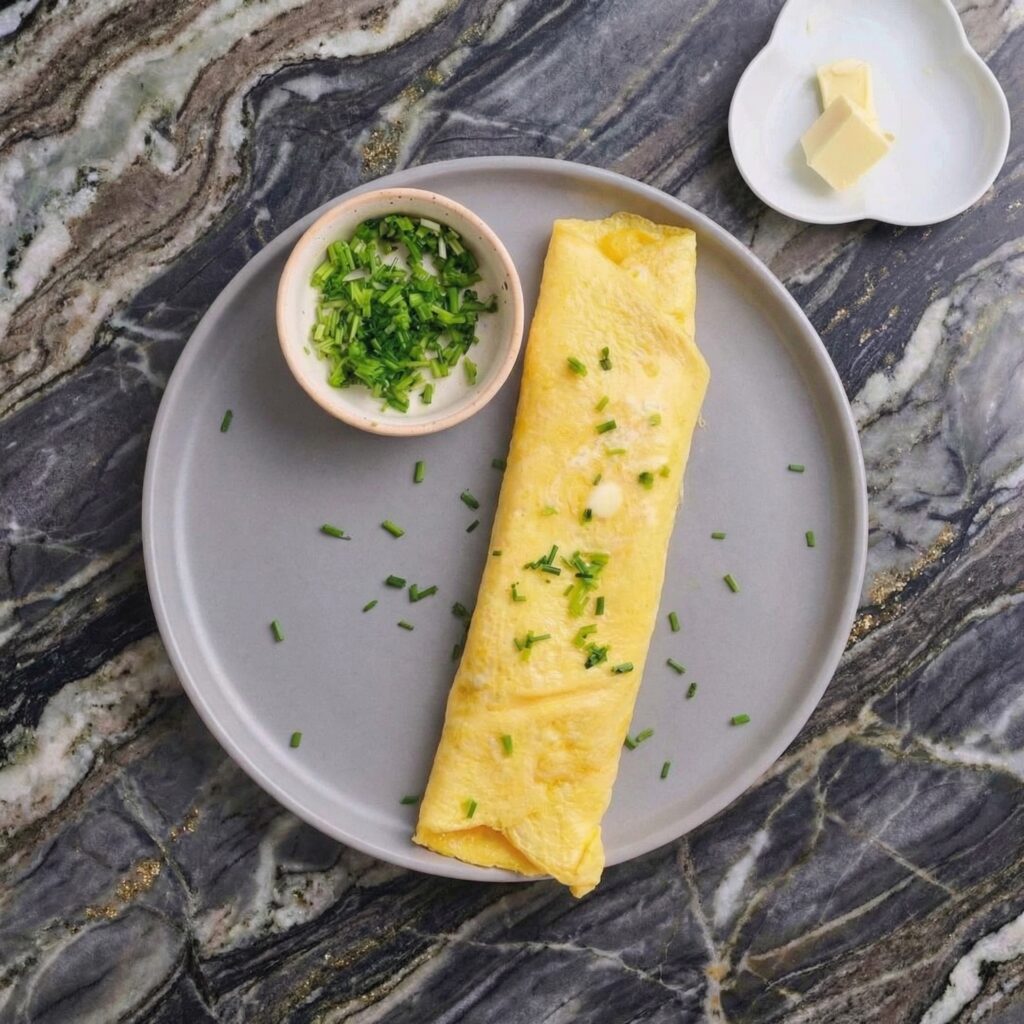
The French omelette is a thing of beauty—smooth and pale yellow on the outside, soft and creamy within, rolled into a perfect cylinder. It’s the dish that separates home cooks from true chefs, a test of patience and technique. But here’s the secret: with a little practice and the right method, anyone can master it.
This omelette has no browning, no color, just pure, velvety eggs that are barely set and incredibly creamy. It’s simple, elegant, and absolutely delicious. Serve it with a sprinkle of fresh herbs and a slice of crusty bread for a breakfast that feels like a Parisian café.
Ingredients
For the French Omelette (serves 1):
- 3 large eggs, preferably farm-fresh
- 1 tablespoon cold unsalted butter, divided
- 1 teaspoon finely chopped fresh chives or parsley
- Salt and white pepper to taste
For Serving (Optional):
- Fresh chives, chopped
- Crusty baguette
- Simple green salad
Instructions
1. Prep the Eggs: Crack the eggs into a small bowl. Using a fork (not a whisk), beat them gently until the whites and yolks are just combined but not frothy. You want them homogenous but with no bubbles. Season with salt and white pepper.
2. Heat the Pan: Place an 8-inch non-stick skillet over medium-low heat. Add ½ tablespoon of the butter and let it melt, swirling to coat the pan. The butter should foam gently but not brown.
3. Add the Eggs: Pour the beaten eggs into the pan. Let them set for just a few seconds, then immediately begin stirring with a rubber spatula. Use a circular motion, scraping the bottom of the pan constantly.
4. Stir Constantly: Continue stirring over medium-low heat, moving the spatula around the pan to form small, soft curds. The eggs should never stop moving. This takes about 45-60 seconds. The eggs will gradually thicken but remain soft and creamy.
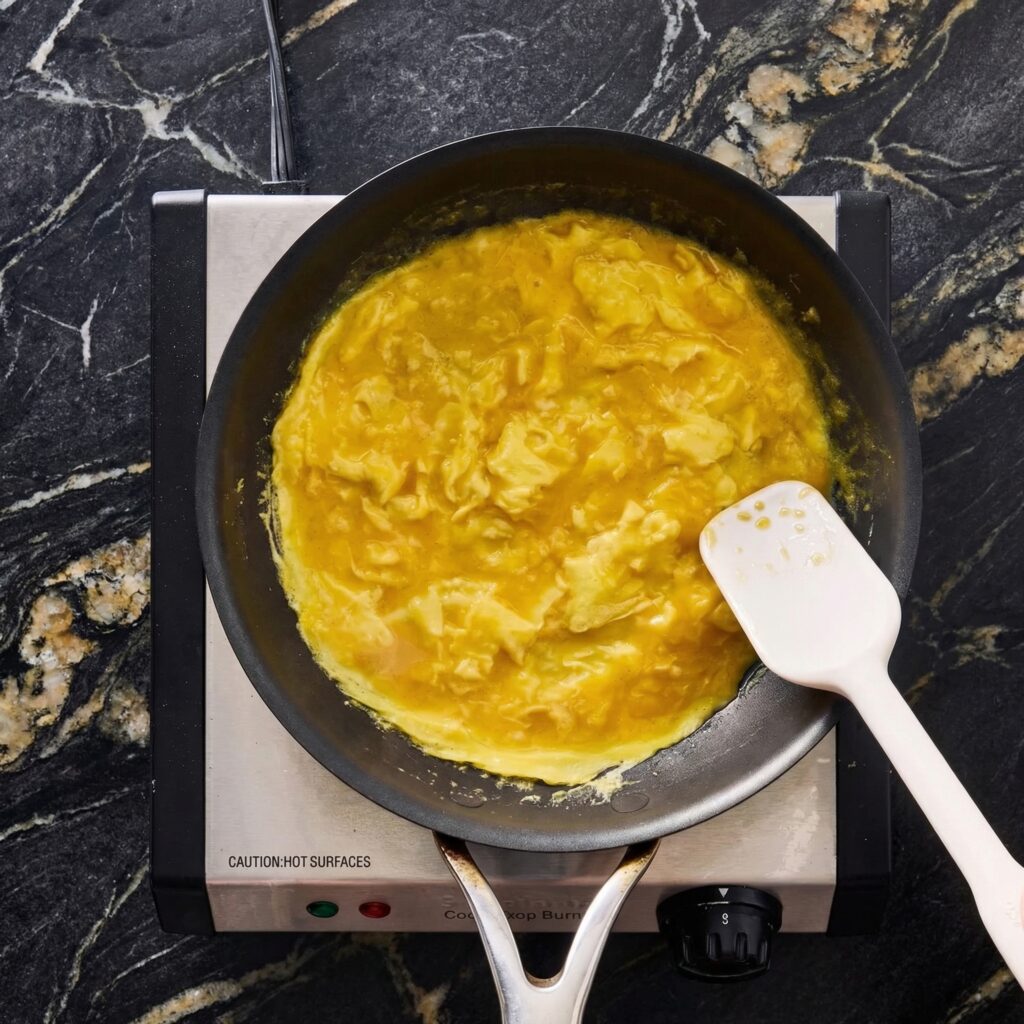
5. Stop Stirring: When the eggs are about 75% set (still quite soft and creamy, with some liquid remaining), stop stirring and let them rest for 5-10 seconds. The bottom will set slightly.
6. Tilt and Tap: Tilt the pan away from you at a 45-degree angle. Use the spatula to gently fold the top edge of the omelette toward the center. Tap the pan handle to encourage the omelette to slide and roll.
7. Roll the Omelette: Continue rolling the omelette toward the edge of the pan, using the spatula to guide it. It should form a neat cylinder. Invert onto a plate, seam-side down.
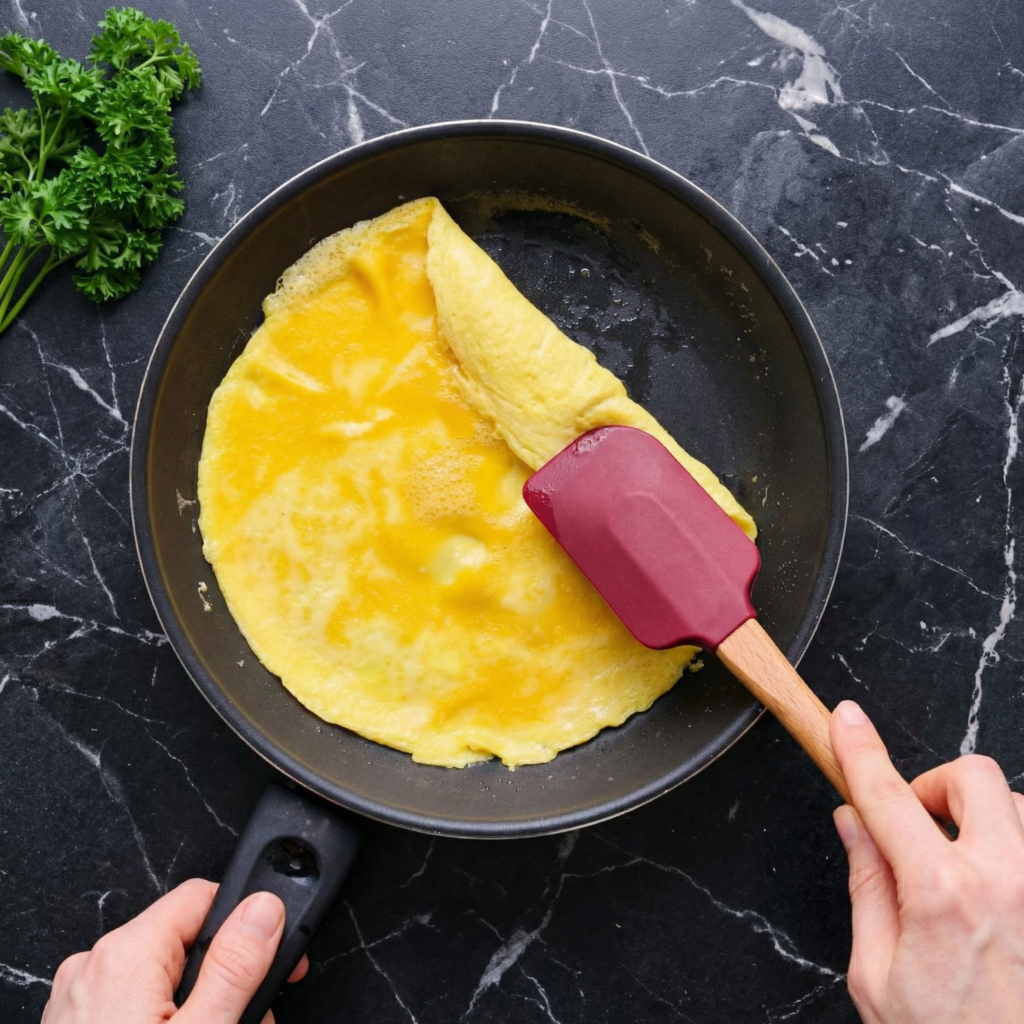
8. Shape and Finish: Use your hands (careful—it’s hot!) or a clean towel to gently shape the omelette into a perfect cylinder. Rub the remaining ½ tablespoon of butter over the top for a beautiful sheen.
9. Garnish and Serve: Sprinkle with fresh chives and serve immediately with crusty bread and a simple salad.
Pro-Tips for Omelette Perfection
- Use the Right Pan: An 8-inch non-stick skillet is essential. The eggs won’t stick, and the sloped sides help with rolling.
- Low and Slow: Medium-low heat is crucial. If the heat is too high, the eggs will brown and become tough.
- Stir Constantly: Constant motion creates those soft, creamy curds. Don’t stop until the eggs are 75% set.
- Take It Off Early: The eggs will continue to cook from residual heat. Remove them from the pan while still slightly underdone.
- No Color: A true French omelette has no browning—just pure, pale yellow.
- Fresh Eggs Matter: Farm-fresh eggs have better flavor and texture.
- Practice Makes Perfect: The French omelette takes practice. Don’t be discouraged if your first few aren’t perfect.
- Add Fillings (Optional): For a filled omelette, add cheese, herbs, or sautéed mushrooms just before rolling.
This Perfect French Omelette is soft, creamy, and absolutely elegant.
